
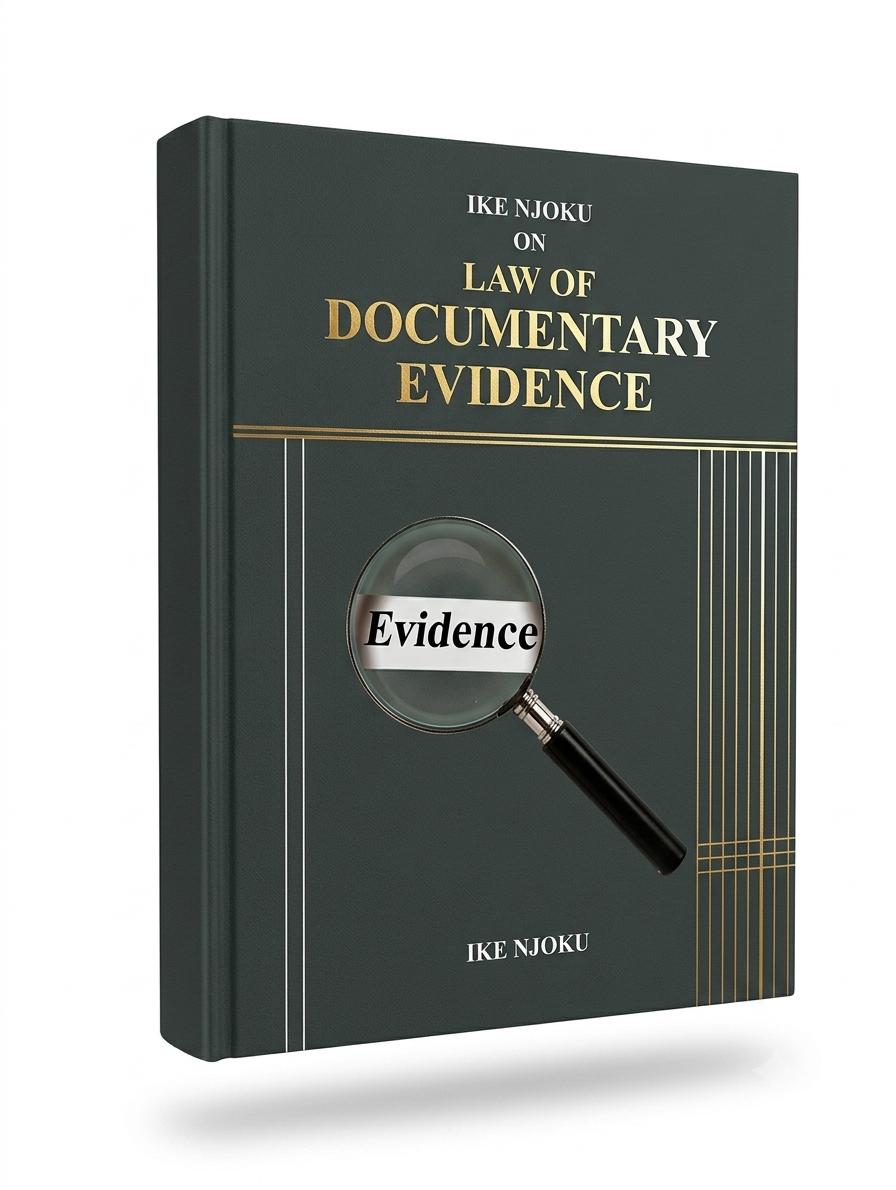

Description
About the Book
This is a book on the Law of Documentary Evidence. It deals with the understanding and mastery of the rules guiding the use of documents to establish the truth of disputed facts in court proceedings. These rules derive from the common law practices established over the course of hundreds of years and eventually codified in the Evidence Act of Britain in 1851. For many decades, these were administered in British colonial territories as Evidence Ordinances. In the case of Nigeria, there have been repeated “amendments” of these statutes which are no more than the swapping of sections of the statute without significant changes in the basic law. Unlike Nigeria, however, India which was also a colony of Britain has retained its Evidence Act since 1892 till date. Desire amendments to the Indian Evidence Act have come in the form of addenda to the principal law. Nigeria appears ready to step into its era of stability with the passage of the Evidence Act of 2011. Expectedly, the Evidence Act, 2011 is a wholesale adoption of the English and Indian Evidence Acts and their subsidiaries. Needless to attempt a re-invention of the wheel. It has followed up in 2023 with the passage into law of the Evidence (Amendment) Act, 2023, also analysed here.
In expounding on the sections of the Evidence Act relating to Documentary Evidence, Ike Njoku has adopted a contemporary approach. Copious references have been made to decisions of the courts of other Common Law countries especially India. Wherever this has occurred, effort has been made to seek out and highlight corresponding Nigerian decisions to drive home the point being made and to point out differences where they exist. The book is an effort at equipping the student and the practitioner alike with a nuanced understanding of the subject through recent case law. It guides the practitioner to make informed use of the documentary evidence at his disposal and to effectively counter what is being presented by the other side. It is an invaluable aid to the judge in his duty of evaluating and reaching decisions on what is presented by both sides. Our goal is that the reader, whatever his class, may understand and apply the principles of the law of Documentary Evidence with greater clarity, assurance and conviction.
About the Author
Njoku Ikechukwu Christian graduated from the Faculty of Law, University of Nigeria, Enugu Campus (UNEC) and was called to the Nigerian Bar in 1986. But for a short spell with the Federal Ministry of Justice, the Executive Council of the British Council in Nigeria on its Justice For All (J4A) program, Independent Corrupt Practices And Other Related Offences Commission (ICPC), the Code of Conduct Bureau, and anti-corruption agencies in Nigeria to structured and participated in training lawyers from the Real Estate sector on framing global engagements and interactions with the Financial Crimes Commission (EFCC), the Indian Police Service (IPS), crafting practice-based legal literature to enhance their prosecutorial capabilities and court-room work. The conceptual presentation of documentary evidence for trial lawyers that revealed a need for a more practical approach is material to his earlier work, The Law of Electronic Evidence, (Five Clans Publishers Ltd., Abuja, 2017). He is married to Barrister [Mrs.] Ann, Admichidima Njoku, (Nee Amanze) and together, they have six children.
No more offers for this product!
General Inquiries
There are no inquiries yet.



Reviews
There are no reviews yet.