


₦51,500.00
- You cannot add another "Steve Jobs By Walter Isaacson" to your cart. View cart


Description
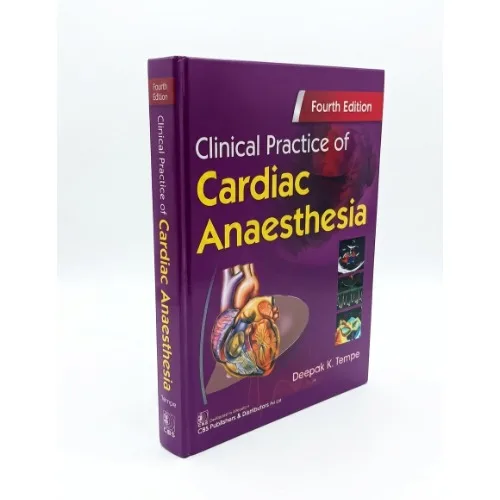
This is the new edition of Clinical Practice of Cardiac Anaesthesia by Professor Deepak K. Tempe. Its previous edition was received very well and it can be expected that this will hold for this edition, as well. It remains remarkable that the book is the single-handed work of Professor Tempe, except one chapter on cardiac physiology that is written by Professor Neema. In the preface, it is mentioned that the updating process was not only time-consuming, but also physically and mentally tiring. Professor Tempe admits that he almost had given up, but fortunately the continued pressure around him of not only anaesthesia residents but also cardiac surgical residents (!), inspired him to continue the hard work.
The result is a concise book that enjoys a clear and pleasant format and covers the essential aspects of the subspeciality of cardiac anaesthesia with up-to-date references. The structure of the book compared with the previous edition is maintained, except the addition of a chapter on cardiac physiology. The first four chapters are on preoperative assessment of cardiac risk, anaesthetic agents, physiology of the cardiovascular system, and haemodynamic monitoring during cardiac surgery. The physiology chapter is very basic, as the cardiac pathophysiology is included in chapters on valvular, coronary artery, and congenital heart disease. In the chapter on haemodynamic monitoring, the pictures on transoesophageal echocardiography are updated, providing a nice and very clear overview of the standard cross-sectional views and also include some examples of pathology. Although most monitoring modalities are included in the chapter, no mention is made of the recent development on the use of dynamic haemodynamic parameters to guide goal-directed fluid management. Chapters 5 through 7 describe anaesthesiological aspects for cardiac surgical patients with valvular, coronary artery, and congenital heart disease. These chapters are well structured starting with clinical presentation followed by the pathophysiology and anaesthetic considerations. The book continues with anaesthesia management of closed-chest cardiac operations, management of cardiopulmonary bypass, anticoagulation, haemostasis, blood conservation, perioperative circulatory support, and myocardial protection during cardiopulmonary bypass described in Chapters 8 through 13. The final chapters provide information on postoperative management, neurological dysfunction, management of the cardiac patient undergoing non-cardiac surgery, and anaesthesia in the catheterization laboratory. The final chapter contains a detailed anaesthesia protocol that is used in the G.B. Pant Hospital, Delhi, India, for adult cardiac surgical cases.
The concise nature of the book has forced the author to be restricted to the essentials, although enough space is reserved for background and practical details on the included subjects. However, in the attempt to retain the uniqueness of the book, choices had obviously to be made in the subjects that are covered in the book. For instance, it is remarkable that the book contains no chapter on anaesthesiology aspects of aortic disease or cardiac surgical emergencies, and the developments on perioperative haemostasis and transfusion strategies, such as the use of concentrates (e.g. fibrinogen and coagulation factors), are omitted.
However, these omissions can be considered minor, as the book provides a wealth of information on the clinical practice of cardiac anaesthesia. It is truly admirable, how Professor Tempe succeeded again in providing a concise but comprehensive textbook that is so easy to read. In addition, with all the updated references, the reader has a lot of literature at hand if more background information is needed. Finally, although we may have to thank Professor Tempe’s residents, who kept the pressure high enough, it would be prudent to congratulate the author again on this revised edition.
Cardiac Anaesthesia provides clinically relevant material to the students, residents and practising anaesthesiologists in the field of cardiac anaesthesia. This edition has been thoroughly updated and many chapters have been made more comprehensive. A new chapter on vascular anaesthesia has been added which is likely to fill the gap that this book had earlier. It has been written in a lucid style and simple easy to understand language that will make the comprehension of this difficult subject easy for the readers. The figures and illustrations add to the ease of understanding. The beauty of the book lies in the fact that it provides comprehensive clinically relevant material without being too extensive. List of references at the end of each chapter will help the interested readers to access the details on the subject. The book will be useful for the students pursuing the postdoctoral DM/DNB/Fellowship courses in cardiac anaesthesia. In addition, all the postgraduate students of anaesthesia,
senior residents and junior consultants working in the field of cardiac anaesthesia will find it useful. Some chapters such as those on haemodynamic monitoring, cardiac patient undergoing noncardiac surgery, postoperative management and closed heart procedures will be useful for the general anaesthesiologists as well.
senior residents and junior consultants working in the field of cardiac anaesthesia will find it useful. Some chapters such as those on haemodynamic monitoring, cardiac patient undergoing noncardiac surgery, postoperative management and closed heart procedures will be useful for the general anaesthesiologists as well.
No more offers for this product!
General Inquiries
There are no inquiries yet.









Reviews
There are no reviews yet.